
Wibe de Jong
Links
Admin Support
Peyovich,Kerri K, Admin QSA
KPeyovich@lbl.gov
Lance,Rachel, Admin Group
RLance@lbl.gov
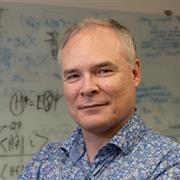
Bert de Jong serves as the Department Head for Computational Sciences, and leads the Applied Computing for Scientific Discovery Group, which advances scientific computing by developing and enhancing applications in key disciplines, as well as developing tools and libraries for addressing general problems in computational science.
de Jong is the Director of the Quantum Systems Accelerator, which is part of the National Quantum Initiative. In addition, de Jong is the Team Director of the Accelerated Research for Quantum Computing (ARQC) Team MACH-Q, funded by DOE ASCR, focused on developing error-aware software stacks for hybrid quantum computing devices. He is a co-PI on two science with quantum focused projects in DOE Basic Energy Sciences and DOE High-energy Physics.
de Jong was heavily involved in the DOE ASCR Exascale Computing Project (ECP) as the LBNL lead for the NWChemEx effort, contributing to the development of an exascale computational chemistry code. He is the LBNL lead for the Basic Energy Sciences SPEC Computational Chemistry Center (led out of PNNL), where he is working on reduced scaling MCSCF and beyond GW approaches for molecules.
de Jong's research portfolio also has a strong focus on inverse design with machine learning and artificial intelligence for chemical sciences and self-driving labs. He co-PI on a DOE BES carbon capture from air project and an NA-22 project, where he focuses on using machine learning and computational chemistry to design new molecular crystals for carbon dioxide adsorption and developing ML/AI tools for self-driving laser labs. He was a co-PI on the on a DOE BES Rare Earth Project, focused on discovering new materials for rare earth separation, and and RESTOR-C Earthshot, with a goal to achieve full predictablity of metabolomes with mass-spectrometry. As part of these efforts, his team developed the ML4Chem Python package.
In 2020 de Jong was elected as a Fellow of the AAAS. He is a senior member of ACM and IEEE.
de Jong publication record, citations and H-index can be found on Google Scholar or Publons. He is the Founding Editor-in-Chief for the IOP journal Electronic Structure, and a Principal Editor for Computer Physics Communications.
Prior to joining Berkeley Lab, de Jong was with the Pacific Northwest National Laboratory (PNNL). There he led the High-Performance Software Development Group responsible for NWChem at the Environmental Molecular Sciences Laboratory (EMSL), a national scientific user facility providing integrated experimental and computational resources for environmental molecular science research. de Jong earned his doctorate in theoretical chemistry in 1998 from the University of Groningen in the Netherlands. He earned his master’s in chemistry from the University of Groningen in 1993 and his bachelor’s degree in chemical engineering from the Technical College of Leeuwarden, the Netherlands, in 1990. He was a postdoctoral fellow at PNNL before transitioning to a staff member in 2000.
Area of Interest
- Physical Chemistry (incl. Structural)
- Theoretical and Computational Chemistry
- Atomic, Molecular, Nuclear, Particle and Plasma Physics
- Inorganic Chemistry
- Computer Software
